


Why old EV tax articles are so hard to spot
An article about electric vehicle tax written in 2023 looks exactly like one written last month, because nothing on the page tells you which tax year it describes. That is the problem in a nutshell, and it catches out sensible people who are doing the right thing by researching before they commit.
The electric vehicle rules have moved a lot in a short space of time. Company car benefit rates have been legislated years ahead and then revised, vehicle excise duty changed for electric cars in April 2025 after years of them paying nothing, capital allowance deadlines have been extended more than once, and there is a mileage-based charge now announced for 2028. Any of those changes can turn a perfectly accurate 2023 article into something misleading without a single word of it being edited.
So the habit worth building is simple. Whenever you read a figure about EV tax, look for the tax year it applies to. If the article does not say, treat the number as unverified and go and find it on gov.uk before you make a decision on it. The categories below are the ones that come up most often for the owner-run businesses I work with, and each one has a specific official page where the current number lives.
Benefit in kind on an electric company car
If the business provides a car that a director or employee can use privately, that use is taxed as a benefit in kind, and for electric cars the rate is still low but rising on a published schedule. For the 2026-27 tax year, HMRC's appropriate percentage for a car with zero CO2 emissions is 4%, up from 3% in 2025-26.
The way the calculation works matters as much as the percentage. You take the car's P11D value, apply the appropriate percentage for its emissions, and that gives the taxable benefit the driver pays income tax on, with the employer paying Class 1A National Insurance on the same figure. A low percentage on an expensive car can still produce a bigger benefit than a higher percentage on a cheap one, which is why the headline rate on its own tells you very little.
The rise is already legislated some way out. HMRC has published 5% for 2027-28, then 18% for 2028-29 and 19% for 2029-30. On a three or four year lease, the later years of your agreement may well sit in a different rate band from the year you sign, so it is worth looking at the whole term rather than just the first year.
The live figures sit in Appendix 2 of HMRC's 480 guidance, which is the table to check rather than a summary elsewhere.
Vehicle excise duty now applies to electric cars
Electric cars stopped being exempt from vehicle excise duty on 1 April 2025, and this is the single change that catches out the most people, because a great many articles online were written while the exemption still applied. An electric car registered on or after 1 April 2025 pays £10 for the first year and then the standard rate, currently £200 a year.
There is a second charge to know about. The expensive car supplement applies on top of the standard rate for five years from the second year of tax, and for zero emission cars the threshold was raised from £40,000 to £50,000 at Budget 2025. That £10,000 of headroom is genuinely useful, because a fair number of electric cars sit in exactly that band, and it is a good example of a figure where an article from last year would now give you the wrong answer.
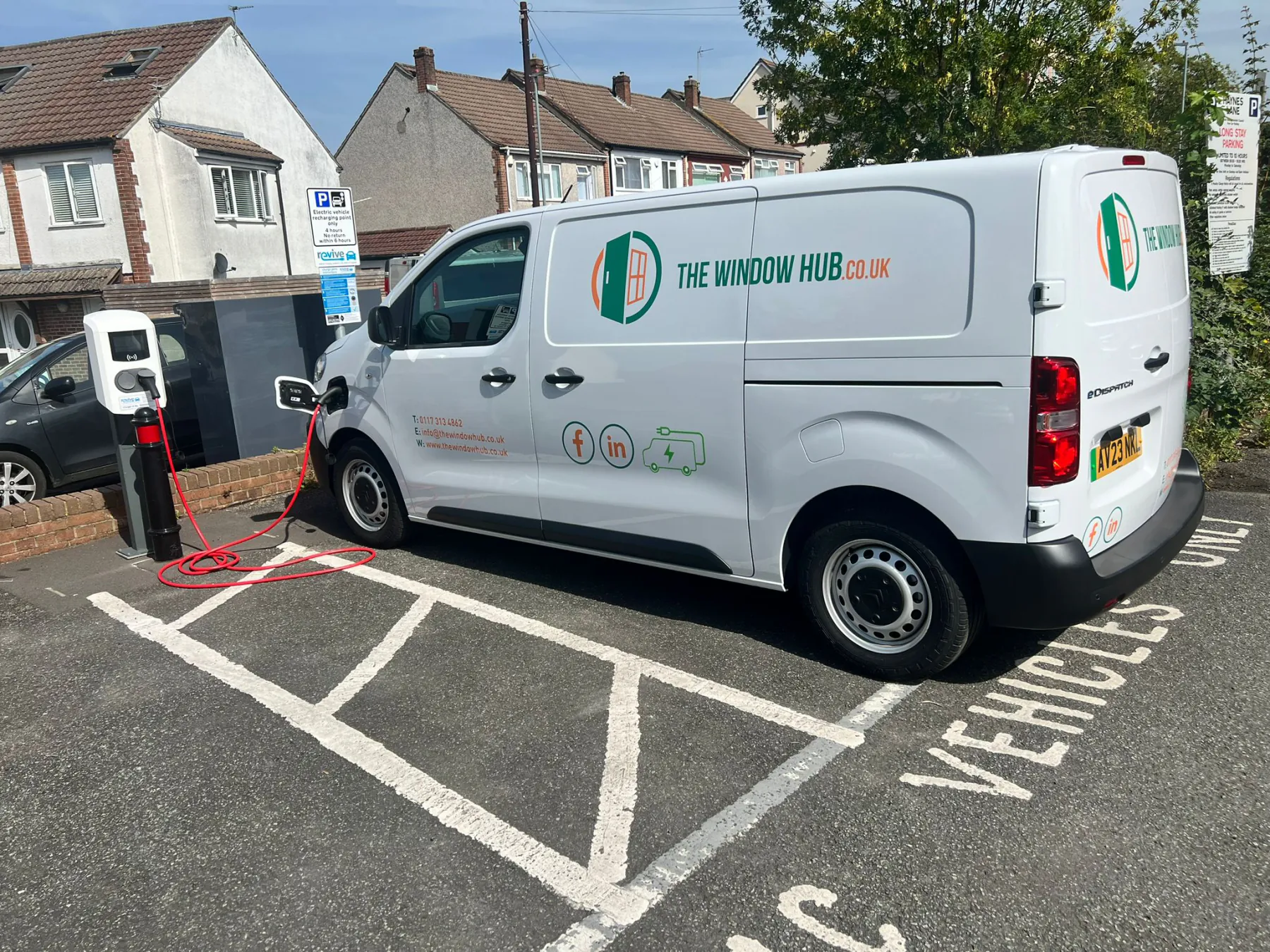
Electric vans have moved to the standard annual rate for light goods vehicles rather than being treated separately. If the vehicle you are considering is a van, that is a different rate table from the car one, so check the right table.
DVLA publishes the current position on vehicle tax for electric and low emission vehicles.
The mileage charge coming in 2028
There is a new charge on the horizon that does not affect anything you order today, but does affect how you think about a lease running past 2028. Electric Vehicle Excise Duty, or eVED, is a mileage-based charge announced at Budget 2025 and due to start on 1 April 2028, set at 3 pence per mile for battery electric and hydrogen cars and 1.5 pence per mile for plug-in hybrids.
The consultation on it closed in March 2026 and the government published its response on 13 July 2026, with the legislation amending the Vehicle Excise and Registration Act 1994. Because it is announced rather than fully in force, the detail can still shift, so treat the pence-per-mile figures as the current stated intention rather than a settled fact.
What this means practically for a small business is worth keeping in proportion. If you are signing a four year agreement now, part of that term will fall after April 2028, and a high-mileage vehicle will feel a per-mile charge more than a low-mileage one. It is a reasonable thing to factor into a long agreement and an unreasonable thing to panic about. HMRC's page on Electric Vehicle Excise Duty carries the current position.
Capital allowances if you buy rather than lease
If the business buys an electric car outright, a 100% first-year allowance is available on new zero-emission cars and on equipment for electric vehicle charge points, which lets you deduct the full cost against profits in the year you spend it. This one has a deadline, and the deadline has already been extended more than once, so it is a prime candidate for out-of-date articles.
The allowances were extended by a further year in a policy paper published on 26 November 2025. They now run to 31 March 2027 for corporation tax and 5 April 2027 for income tax. If you read anywhere that they expire in 2025 or 2026, that article was written before the extension and is simply behind.
Whether this matters to you depends entirely on how you fund the vehicle, because capital allowances apply to purchase and not to a contract hire agreement where you never own the vehicle. That is one of the genuine decision points between buying and leasing, and it is a question for your accountant rather than for me, since it turns on your profits, your year end and how the rest of the business is structured. My side of it is making sure you know which funding solutions are available for the vehicle you want, which is part of what I cover in business vehicle leasing and sourcing. The allowance detail is on gov.uk under claim capital allowances.
Salary sacrifice and why electric cars are treated differently
Salary sacrifice on cars was largely shut down in 2017, with one significant exception that still stands: cars with CO2 emissions of 75g per kilometre or less, which includes every fully electric car. Those cars sit outside the optional remuneration arrangement rules, so the employee is taxed on the benefit in kind rather than on the salary given up.
That exception is the whole reason electric car salary sacrifice schemes exist and why they have grown quickly. Combine it with a benefit in kind rate of 4% for 2026-27 and the arithmetic can work well for both the employee and the employer, though it depends on the individual's tax position and on the scheme being set up properly through payroll.
There are real obligations on the employer side, covering payroll treatment, what happens when someone leaves partway through an agreement, and who carries the risk on early termination. Those need your accountant or payroll adviser, and I would rather flag them early than let them surface after an order is placed. The rules are set out in HMRC's Employment Income Manual at EIM44060 and in the general salary sacrifice guidance for employers.
Charging costs and workplace charging
Two separate things get muddled here, so it helps to keep them apart. Providing charging facilities at or near the workplace, available generally to your employees, does not create a taxable benefit, a rule that has applied since 6 April 2018. Reimbursing an employee for charging their vehicle away from your premises, at a motorway services for instance, is not covered by that same exemption.
For mileage reimbursement on a fully electric company car, HMRC publishes an advisory electricity rate, and this one now splits by where the charging happens. From 1 June 2026 the rate is 7 pence per mile for home charging and 15 pence per mile for public charging. Where a car is charged in both places you can apportion the mileage, provided the split is fair and reasonable.
These rates are reviewed quarterly, on 1 March, 1 June, 1 September and 1 December, which makes them the fastest-moving figures in this whole article and the ones most likely to be stale in anything you read. If you are setting a mileage rate for the business, check the date on the page before you use the number. The current rates are on HMRC's advisory fuel rates page.
What to check before you commit
The pattern across all of the above is that the categories stay stable while the numbers move, so the useful skill is knowing which category your question falls into and which official page answers it. Benefit in kind is Appendix 2, vehicle excise duty is the DVLA guidance, capital allowances have their own page with a live deadline, and the advisory electricity rate changes every quarter.
Where the vehicle side and the tax side meet is where I can genuinely help. The list price of the car relative to the £50,000 expensive car supplement threshold, the expected mileage over a term that may run past April 2028, whether a van or a car suits the work, and which funding solutions are available for the vehicle you want are all vehicle decisions with tax consequences attached. Your accountant owns the tax position and should confirm anything before you sign, and I would say so even if you did not ask.
If you are weighing up an electric vehicle and want to talk through the vehicle side before you take the tax questions to your accountant, get in touch and the first conversation is free. There are more answers about how I work on the FAQs page.